Paleolab – Museum of the Paleontological Collections of Southern Umbria
Paleolab – Paleontological Museum
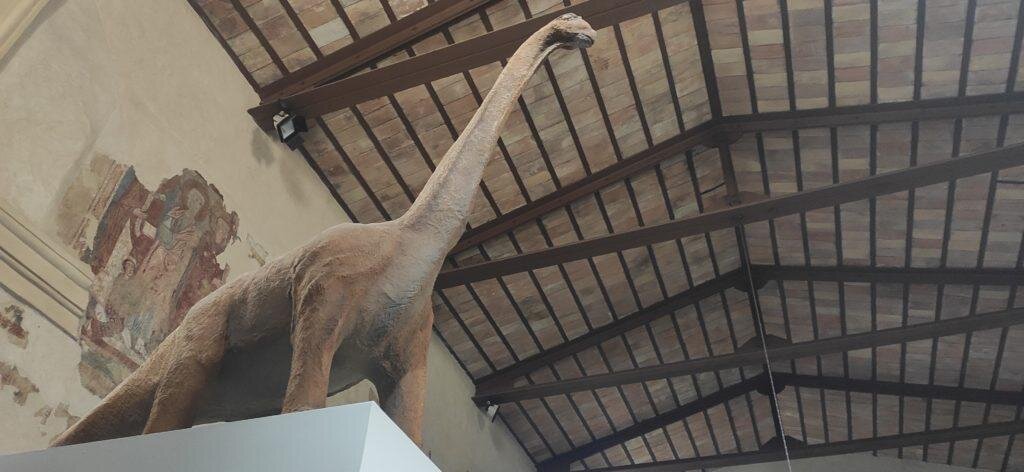
The Paleontological Museum of Terni was officially established in 2002 and is housed inside the deconsecrated Church of San Tommaso, located in Piazza del Mercato in Terni.
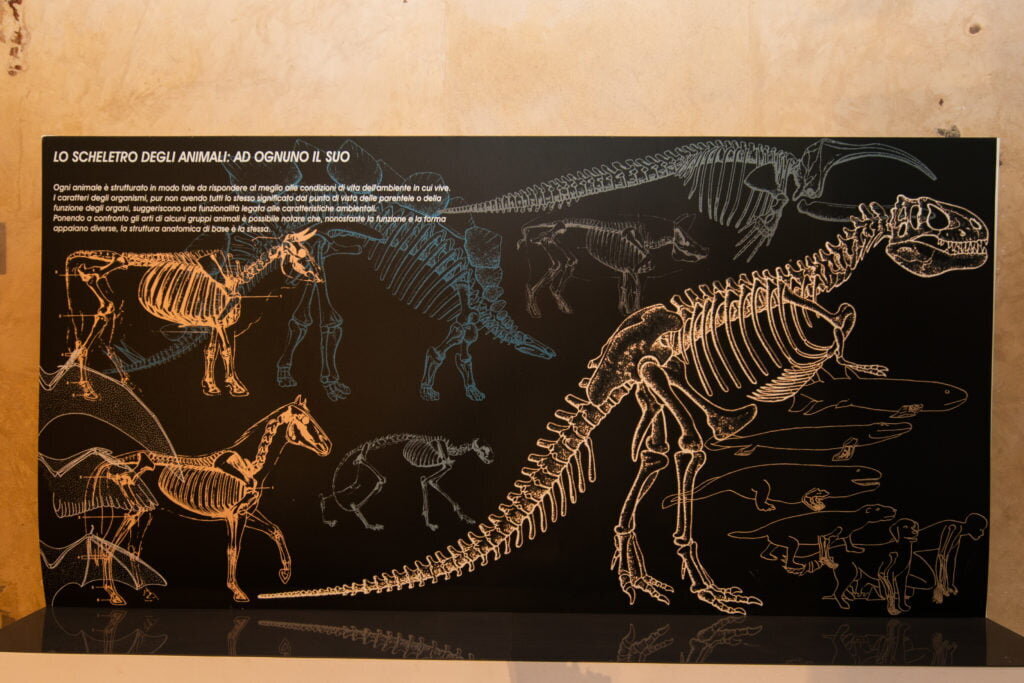
The museum’s exhibition and educational route is divided into three sections:
- the evolution and geological changes of the Earth;
- the fossilization process, closely linked to the transformation phenomena of the Earth;
- fossilized skeletal remains of vertebrates.
Paleolab
The museum’s collection represents an important group of unique materials essential for the study of Plio-Pleistocene micromammals and is among the most significant in Umbria for its vertebrate fossils. The museum houses several thousand specimens, including both continental and marine fossils from southern Umbria.
Among the most remarkable exhibits are the remains of a proboscidean Mammuthus meridionalis, a rhinoceros Stephanorhinus etruscus, a saber-toothed feline Megantereon cultridens, an antelope species Leptobos etruscus, a freshwater turtle Emys orbicularis, and especially a deer Axis nestii: a young female specimen discovered in anatomical connection, meaning fossilized in the exact position in which it died.
In 2012, a new museum layout with a strong educational focus was introduced: a laboratory open to both adults and children, where visitors can embark on a journey through the ancient history of our planet Earth through direct observation of the displayed fossils, as well as interactive games and hands-on activities.
The museum is part of the project The Enchanted Valley: Routes Through Art, History, and Nature, exploring the museums and most beautiful places of southern Umbria.
Open to visitors only for educational activities