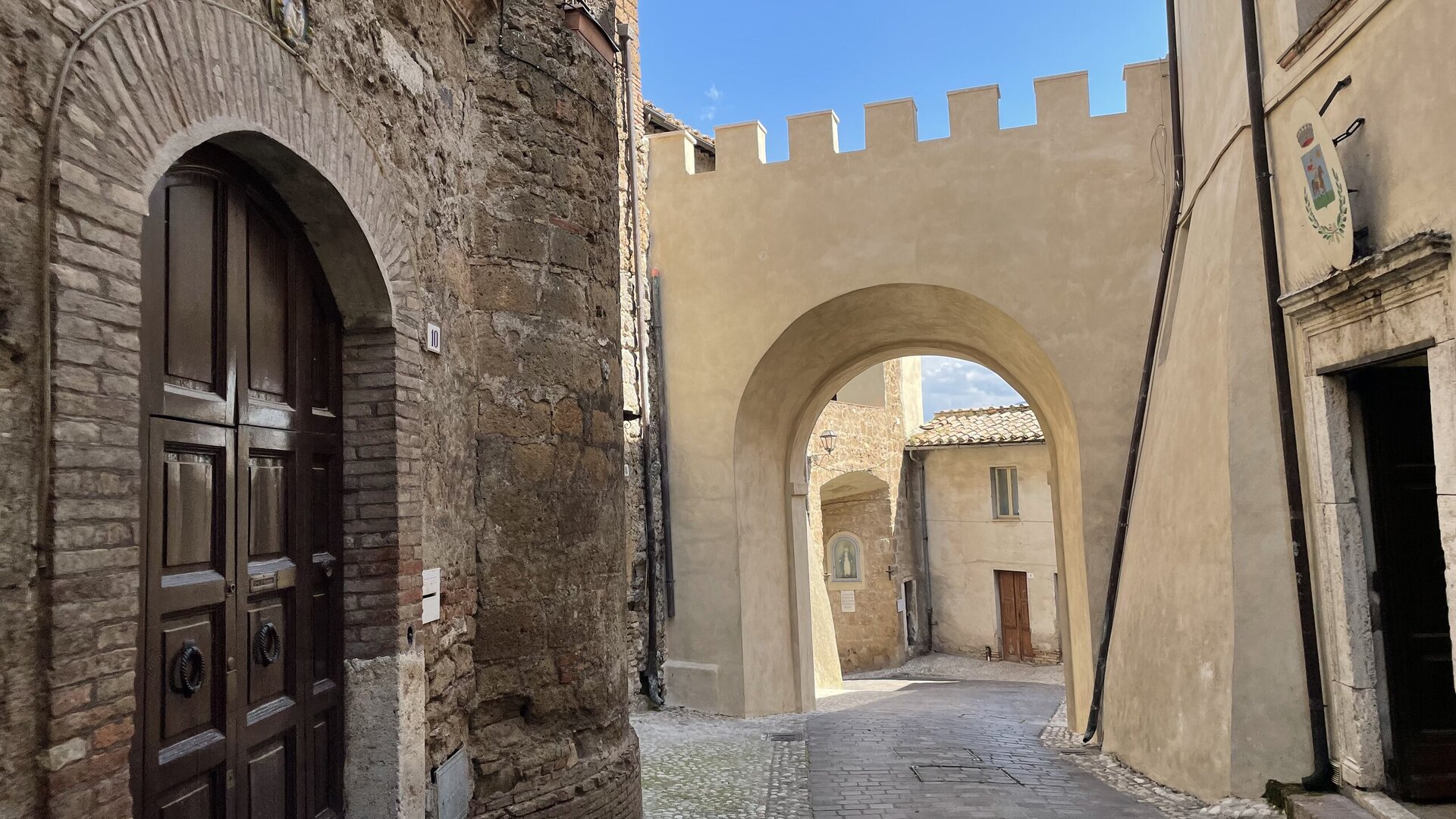
During the 19th century, Otricoli’s historical identity was enriched by new discoveries and growing awareness of its ancient past. Following the papal excavations of the eighteenth century, interest in Ocriculum continued to expand, attracting travellers, scholars and antiquarians fascinated by the Roman ruins scattered along the Tiber Valley.
The village itself remained closely tied to a traditional agricultural economy. Although the Unification of Italy brought political change, daily life in Otricoli continued to revolve around farming, religious devotion and strong community bonds. Confraternities, patronal celebrations and religious festivals remained important occasions for social cohesion and collective identity.
During the 20th century, the two World Wars also left their mark on the community, bringing stories of military service, migration and sacrifice. Yet it was the post-war period that produced the most profound transformations. Rural depopulation accelerated as many young people left the countryside in search of work and opportunities elsewhere, gradually altering the social fabric of the village.
Despite these challenges, Otricoli never lost its connection to its past. In recent decades, renewed efforts to preserve and promote local heritage have led to the enhancement of the Archaeological Park of Ocriculum, the restoration of the Collegiata, and the safeguarding of traditions that continue to define the identity of the community.