The Roman Period and the Municipium of Ocriculum
The Roman Period and the Municipium of Ocriculum
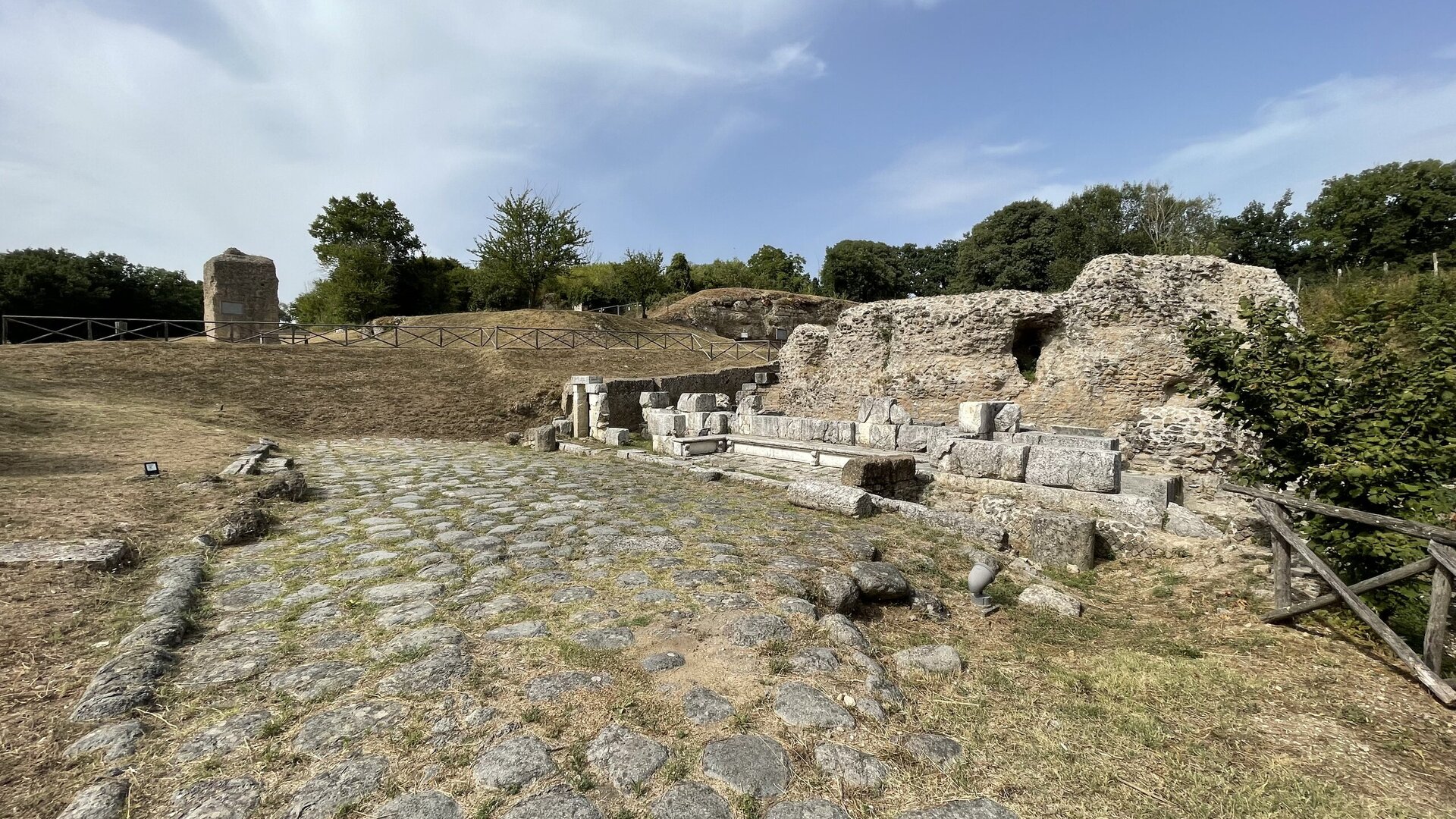
After the Battle of Mevania in 308 BC, Otricoli entered the sphere of Rome through a pact of friendship and alliance. This relationship was strengthened in 220 BC with the construction of the Via Flaminia, which crossed the settlement and significantly enhanced its commercial connections. While retaining its dual character as both a river port and hilltop community, the trading emporium gradually evolved into a true Roman city.
In 90 BC, Ocriculum became a Roman municipium and was assigned to the Arnensis tribe. The city entered a long period of economic and cultural prosperity, thanks to its strategic position between the inland routes of Umbria and its port on the Tiber River, known as the Port of Oil. From here, olive oil, wine, ceramics and other local products were transported to Rome via the river, making Ocriculum an important hub within the Roman trade network.
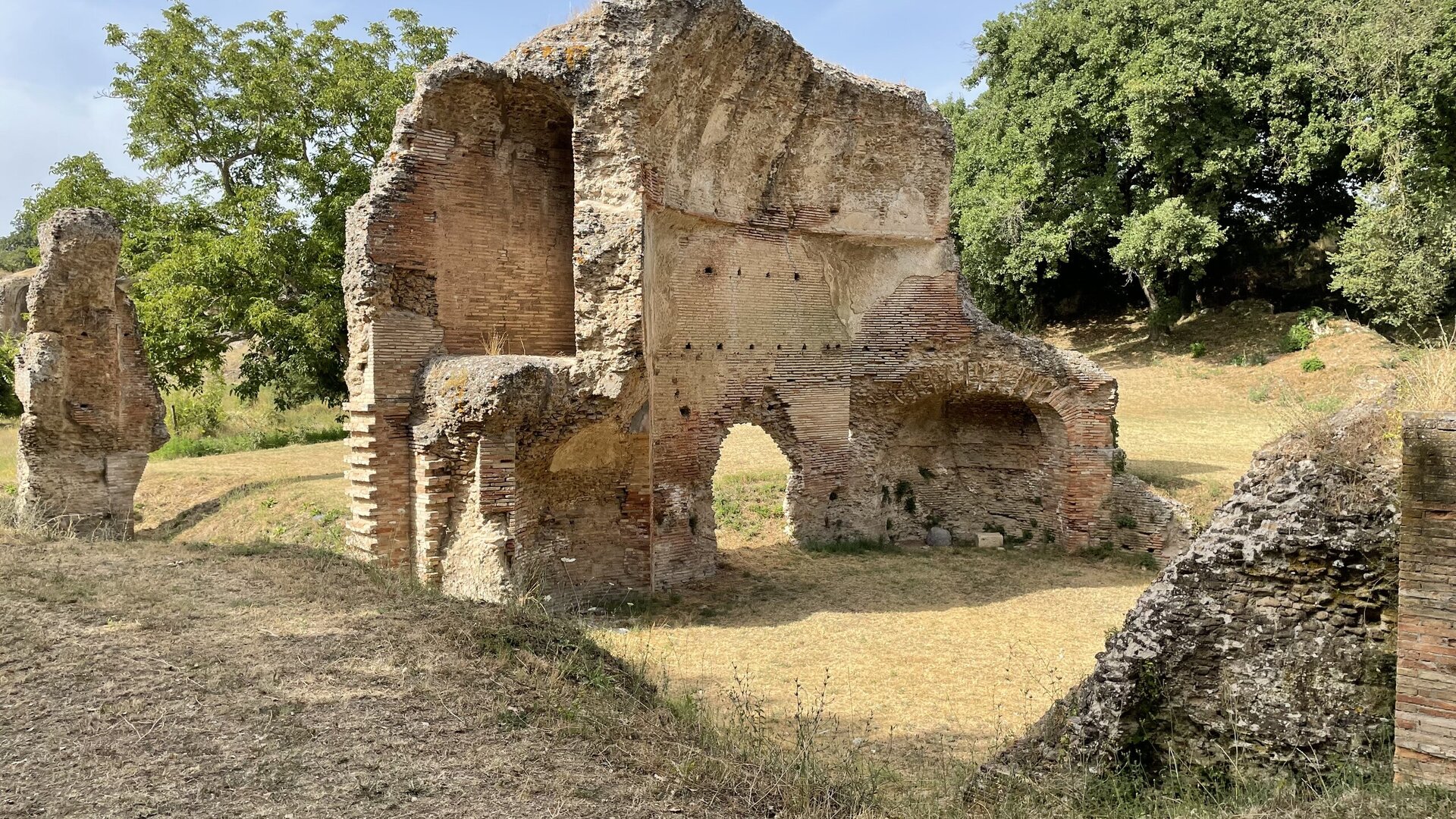
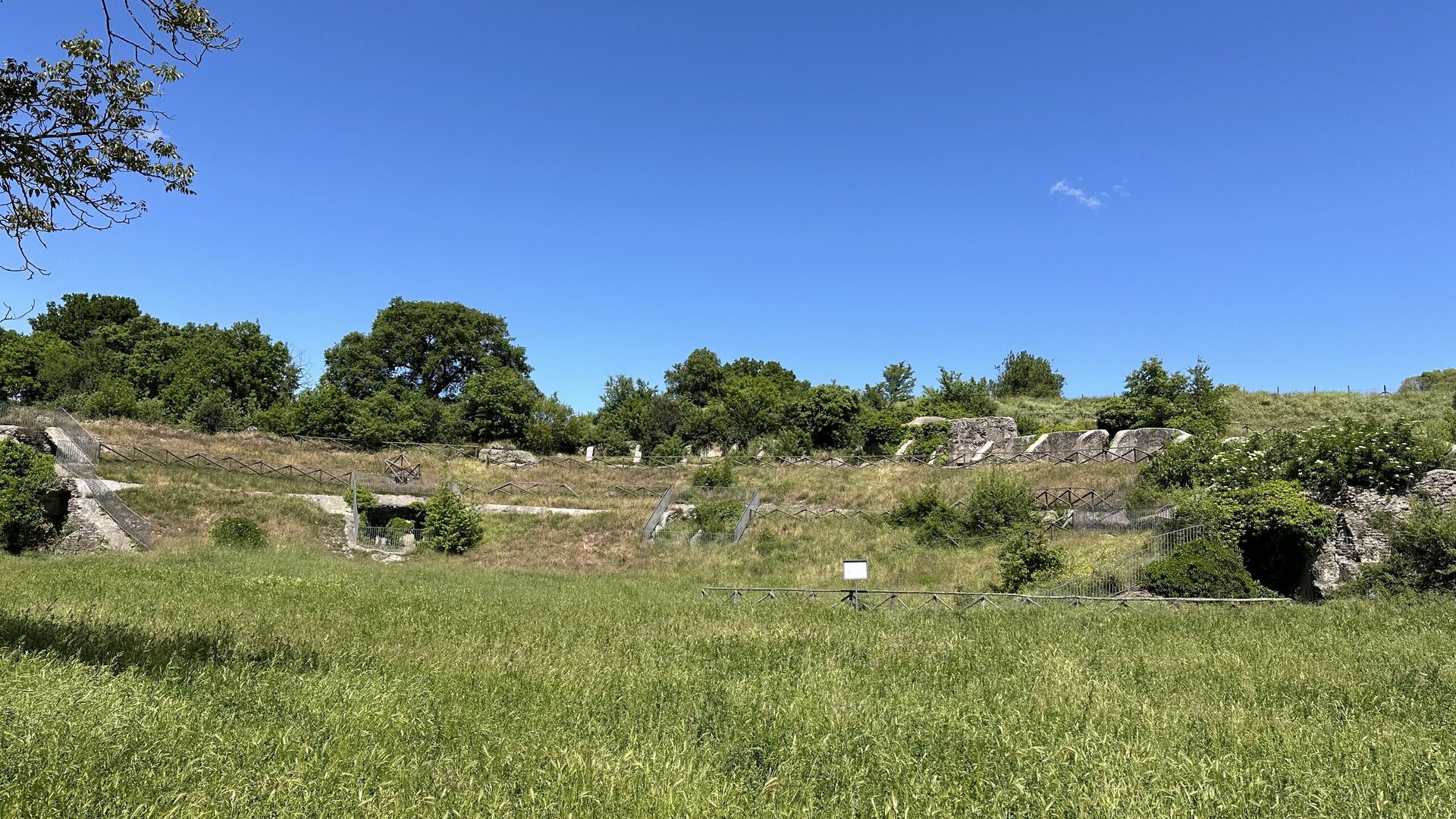
During the reign of Augustus, the city was enriched with monumental public buildings, including a theatre, amphitheatre, forum, nymphaeum, thermal baths, the impressive Great Substructures, and numerous rural and leisure villas.
Among the most notable villa owners were Pompeia Celerina, mother-in-law of Pliny the Younger, and Titus Annius Milo, a prominent political figure of the late Roman Republic.
Between 1775 and 1783, archaeological excavations commissioned by Pope Pius VI brought to light many of the principal monuments of the ancient city, which can still be admired today in the Archaeological Park of Ocriculum.
Among the most remarkable discoveries were the celebrated Jupiter of Otricoli, the magnificent Polychrome Floor Mosaic from the baths—now displayed in the Round Hall of the Vatican Museums—and the famous Old Man of Otricoli, now part of the Torlonia Collection. These findings revealed to the modern world the image of a prosperous and influential Roman municipium at the heart of the ancient communications network.